Article 1 of 3 — 2 min read
Property Taxes in Normandy: What Owners Actually Pay
Short answer
A typical Normandy property owner pays €1,200–€3,500 per year in combined taxes. Rates vary across five départements, with Manche the cheapest and Orne the highest for taxe foncière. Crucially, Normandy has zero communes in zone tendue — so no surcharge on second-home tax.
In detail
Normandy spans five départements, each setting its own local tax rates. That creates genuine variation — a longère in the Manche bocage will attract different taxes from an identical property in Seine-Maritime. Understanding which département your property sits in is the first step to budgeting accurately.
Tax rates across Normandy's five départements
| Département | Code | TFB median rate | THRS median rate | TEOM median rate |
|---|---|---|---|---|
| Calvados | 14 | 34.56% | 18.23% | 9.45% |
| Eure | 27 | 36.78% | 17.45% | 8.67% |
| Manche | 50 | 32.34% | 16.34% | 8.12% |
| Orne | 61 | 37.89% | 17.89% | 8.34% |
| Seine-Maritime | 76 | 35.67% | 18.67% | 9.78% |
Manche consistently comes out cheapest. Orne has the highest taxe foncière rates, though its low property prices mean the absolute bill is often modest. Seine-Maritime has the highest TEOM, reflecting the cost of waste collection across its more urbanised communes.
How Normandy compares to other French regions
| Region | Typical combined annual taxes (200 m² property) | Zone tendue surcharge |
|---|---|---|
| Normandy | €1,200–€3,000 | None |
| Dordogne | €1,500–€4,000 | None |
| Provence | €2,000–€5,000 | Up to 60% in coastal communes |
| Côte d'Azur | €3,000–€7,000 | Up to 60% in most communes |
What this means in practice: Normandy's tax advantage over southern France is twofold — lower base rates and zero surcharge risk. A second home in Calvados pays roughly half the annual tax of an equivalent property in the Var or Alpes-Maritimes.
Typical combined annual bills by property value
| Property type | Est. value | Primary residence | Secondary residence |
|---|---|---|---|
| Village house (80–100 m²) | €100,000–€150,000 | €600–€1,200 | €900–€1,800 |
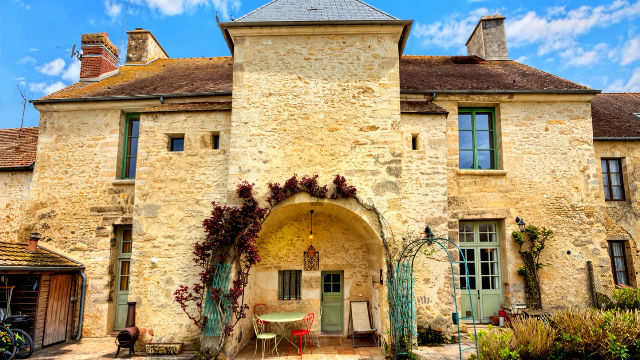
| Longère (150–200 m²) | €200,000–€350,000 | €1,200–€2,200 | €1,800–€3,200 |
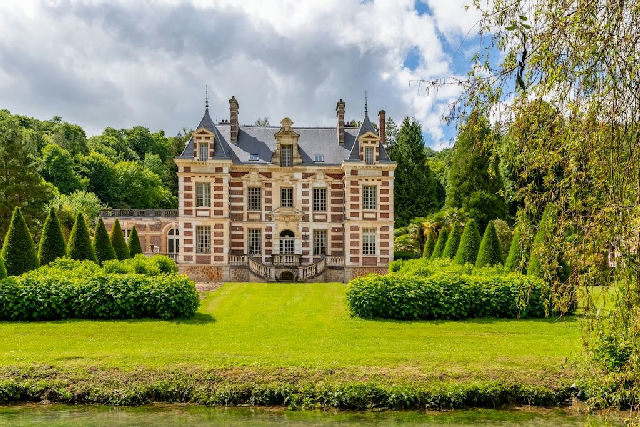
| Manoir (250–400 m²) | €400,000–€700,000 | €2,000–€3,500 | €2,800–€4,500 |
The difference between primary and secondary residence is entirely down to THRS — primary residents do not pay it.
The zero zone tendue advantage
The French government classifies over 3,700 communes as "zones tendues" — housing-pressure areas where councils can levy a surcharge of up to 60% on second-home tax (THRS). Normandy has zero communes on this list. This is a significant and measurable cost advantage for international buyers, most of whom will hold Normandy properties as secondary residences.
For a detailed breakdown of how THRS works in Normandy, see the dedicated second-home tax article below.
Based on DGFiP, REI DGFiP 2025, Décret 2023-822 (zones tendues)
Last reviewed: Feb 2026